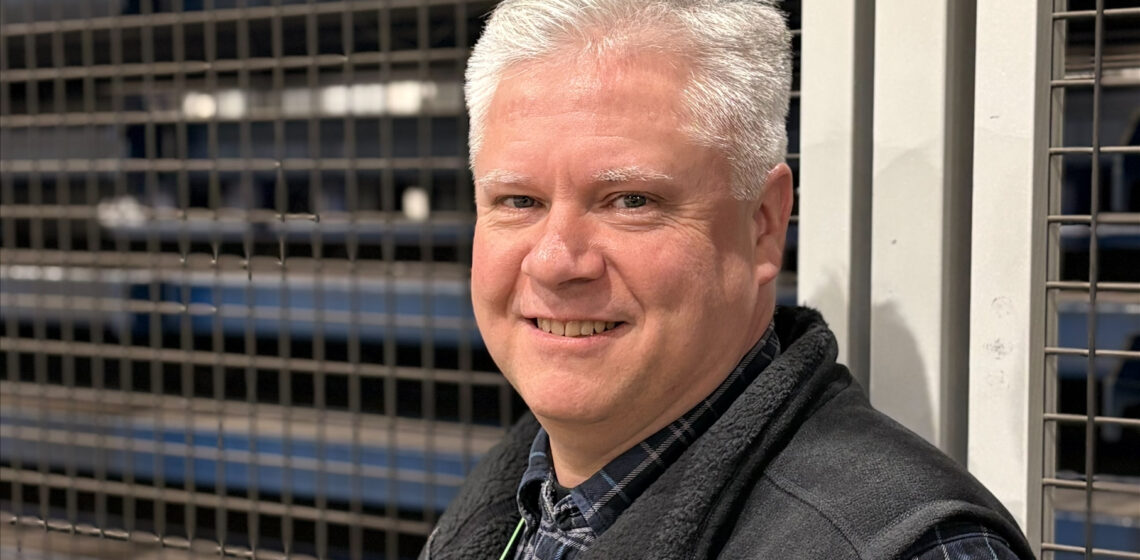
Mike Carrier: A Career Shaped by Curiosity and Technology
December 11, 2025
As a high school junior in 1987, a simple dinner conversation Mike Carrier had with his father planted the seed for a future in manufacturing. His dad described a computer-controlled machine he saw during a tour at Miller Fabrication Solutions that “was running all by itself.”
That concept intrigued Mike, who – fortunately for Miller – ultimately would spend his entire career working with those very machines and watching them evolve in ways he still finds interesting today.
We sat down with Mike to talk about his 35 years at Miller Fabrication Solutions, and he shared some fascinating insights:
Q: When did you join Miller and what was your first role?
After studying electronics in the Air Force, I returned home in 1991 and recalled that dinner table discussion with my dad. It felt natural to apply for a job at Miller, where I was hired in December of that year.
My first stop was in the inspection department. Mike Aaron (a quality process manager and another Miller long-timer) was my boss. He taught me how to use the inspection tools we had back then, along with the right way to deburr parts and write inspection reports.
In those early years, I spent a lot of time reviewing customer drawings, developing work-holding setups, creating tool lists, writing programs and running the first parts myself to “prove out” the process before handing it over to production.
Q: How did your career develop from there?
During my first year at Miller, I was introduced to a CAD/CAM software called Mastercam that integrates design and manufacturing processes. At the time, we had version 3. More than 30 years and 24 versions later, we’re still using Mastercam to create machine programs.
I also led our early engineering department, helping to shape how we approach
programming and process development. I’ve been involved in just about every part of the business in one way or another, and each experience has added another layer of understanding that I rely on today.
Q: How did joining Miller affect your career trajectory?
Joining Miller set the course for my whole career. When I started, I didn’t know exactly where it would take me – I just knew I wanted to learn and be hands-on. Miller enabled both of those things.
Moving from inspection into programming opened a whole new side of manufacturing that immediately caught my interest. I was drawn to understanding how things worked – how a concept on paper became a finished part. That curiosity kept pushing me to learn, experiment and grow as technology evolved.
Mentorship from Mike Aaron and the Miller brothers taught me to approach problems collaboratively. If what we were doing didn’t work, we backed up and thought about it in a new way, until eventually, we were winning again.
Looking back, joining Miller didn’t just shape my career, it molded how I handle challenges – by staying curious, being adaptable and always looking for better ways to get things done.
Q: What opportunities did Miller bring your way?
Miller has opened so many doors over the years. I’ve had the chance to work with equipment, technology and processes that I probably wouldn’t have seen anywhere else.
From early on, the company trusted me to take on new challenges – learning new software, programming different machines and helping build new processes from the ground up. Those opportunities built my confidence and shaped the rest of my career.
An example is when I suggested we invest in a new program called SolidWorks. Everything I’d read about it showed it could solve many of our fixture-design challenges and make us more compatible with our customers’ systems. Miller is open to employees’ new ideas and recommendations. In fact, we’re still using SolidWorks.
For me, a significant moment was when a customer asked how we would meet production volume. That question led me to design several custom machines that didn’t exist commercially – each with touch screens, PLC controls for motion and spindle speed and through-spindle coolant systems for advanced tooling.
It was a real team effort. A lot of talented people were involved, and (now-retired colleague) Jerry Stahlman’s help was especially key. That project pulled everything I’d learned together and pushed me to create something entirely new. Opportunities like that are what keep the work exciting and meaningful.
Q: How has technology changed during your tenure?
The changes have been incredible. When I started, almost everything was manual – tape readers, basic controls and handwritten programs. Every step took time and patience, and there was a lot of trial and error.
As technology advanced, so did the way we worked. The introduction of modern computer numerical controls (CNC) and CAM software completely changed manufacturing.
Another big shift came when we moved from high-speed steel drills to carbide drills under three-quarters of an inch. Not all machines had through-coolant systems at the time, so we modified some and used special holders on others. There was some pushback at first, but once we figured out the right speeds and feeds, drilling times dropped by about 75%. That made a huge impact on productivity.
Q: What has kept you at Miller for 35 years?
It’s the opportunity to keep learning. There’s always something new: new machines, new software, new challenges that make you think differently. It keeps the work interesting.
I’ve also always appreciated that Miller invests in the right tools and technology. The company is committed to doing things the right way and giving people what they need to succeed.
But more than anything, it’s the pride that comes with being part of Miller’s growth. I’ve seen the company evolve in ways I never could have imagined when I started, and it’s rewarding to know I’ve had a hand in that progress.
Q: How would you sum up your career at Miller?
The three words I’d use are rewarding, evolving and fulfilling.
It’s been rewarding because I’ve had the chance to learn, grow and be part of something that’s always moving forward. It’s evolving because the technology and the way we work have changed so much, and I’ve been able to grow along with it. And it’s been fulfilling because the work matters – you can see the results, take pride in them and know you’ve contributed to the company’s success.
I still smile when I think about my dad talking about machines that ran themselves. That idea really stuck with me and came to shape my whole career.